


 805.934.4600

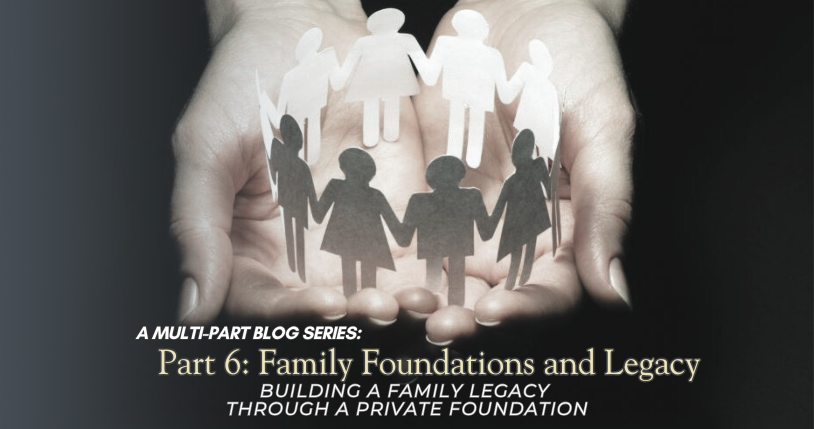
Part 6: Family Foundations and Legacy
Building a Family Legacy Through a Private Foundation
Charitable giving is often a deeply personal act, but it can also be a profoundly communal one. For families who wish to make philanthropy a shared endeavor, one that spans generations and reflects enduring values, a private foundation offers a unique and powerful platform.
In this sixth installment of our series, we explore how private foundations can be used to build a legacy, engage family members, and create a lasting impact. While foundations require commitment and structure, they also offer unmatched flexibility, visibility, and control. For the right donor, they can become more than a financial tool; they can become a cornerstone of family identity.
What Is a Private Foundation?
A private foundation is a nonprofit organization typically funded and controlled by a single individual, family, or business. Unlike public charities, which rely on broad public support, private foundations are funded by a limited number of donors and governed by a board; often composed of family members.
Foundations are subject to specific IRS rules and must operate for charitable purposes. They are required to distribute at least 5% of their assets annually for charitable activities and must file an annual tax return (Form 990-PF) that discloses financials, grants, and governance.
Despite these requirements, foundations offer significant advantages. They allow donors to set their own charitable mission, select grantees, manage investments, and involve family members in decision-making. They also provide a public platform for philanthropy, which can be used to influence causes, attract additional support, or honor a family legacy.
Why Choose a Foundation?
The decision to establish a private foundation is not purely financial, it’s philosophical. It reflects a desire to institutionalize giving, to create a structure that endures beyond the donor’s lifetime, and to engage others in the process.
For many families, a foundation becomes a vehicle for shared values. It provides a forum for discussing charitable priorities, evaluating grant opportunities, and making decisions together. It also offers a way to educate younger generations about stewardship, responsibility, and the importance of giving back.
From a planning perspective, foundations offer several key benefits:
- Control: Donors retain full authority over grantmaking, investments, and governance. They can support a wide range of causes, including public charities, individuals (with proper oversight), and international organizations.
- Flexibility: Foundations can be structured to support specific programs, endow scholarships, fund research, or respond to emerging needs. They can operate indefinitely and evolve over time.
- Visibility: Foundations are public entities, which means they can build a brand, attract partners, and influence public discourse. For families who wish to be known for their philanthropy, this visibility can be a powerful tool.
- Legacy: A foundation can be named in honor of a loved one, reflect a family’s heritage, or serve as a permanent reminder of the donor’s values. It can also be used to engage children and grandchildren in charitable work, creating continuity across generations.
Funding and Structure
Foundations are typically funded with a significant initial contribution, often six to seven figures, though smaller foundations can be viable with careful management. Funding can come from cash, appreciated securities, real estate, or business interests. In some cases, donors contribute over time, building the foundation gradually.
The foundation is governed by a board of directors or trustees, who are responsible for overseeing operations, approving grants, and ensuring compliance. Many families choose to include multiple generations on the board, using the foundation as a tool for education and engagement.
Foundations may hire staff, compensate board members, and contract with outside advisors. They may also establish formal grantmaking procedures, application processes, and evaluation metrics. While this structure requires effort, it also allows for professionalism, accountability, and impact.
Compliance and Responsibilities
Operating a foundation comes with responsibilities. In addition to the 5% annual distribution requirement, foundations must adhere to rules regarding self-dealing, excess business holdings, jeopardizing investments, and taxable expenditures. Violations can result in penalties or loss of tax-exempt status.
Foundations must also file Form 990-PF annually, which includes detailed financial information, a list of grants made, and disclosures about governance. This transparency is part of the public nature of foundations and serves to build trust and accountability.
For these reasons, foundations require legal and accounting support. Donors should work with qualified advisors to ensure compliance, manage investments, and develop effective grantmaking strategies.
A Family Case Study
Consider a family that has built a successful business and wishes to give back to the community that supported them. They establish a private foundation in honor of the family patriarch, funding it with proceeds from the sale of the business.
The foundation supports local education initiatives, funds scholarships for underprivileged students, and partners with community organizations. The board includes the founders, their children, and eventually their grandchildren. Meetings become opportunities to discuss values, evaluate impact, and make decisions together.
Over time, the foundation becomes more than a financial entity, it becomes a family institution. It reflects the family’s story, their priorities, and their commitment to service. It also provides a platform for future generations to continue the work, adapt to new challenges, and carry the legacy forward.
Is a Foundation Right for You?
Not every donor needs a private foundation. For those who prefer simplicity, donor-advised funds may offer similar benefits with less administrative burden. But for families who want control, visibility, and a long-term platform for giving, a foundation can be an ideal solution.
The decision should be guided by your goals, your resources, and your willingness to engage. Foundations require effort, but they also offer unmatched opportunity. They allow you to shape your philanthropy, involve your family, and leave a legacy that endures.
Looking Ahead
In our next post, we’ll explore how faith-based giving and stewardship principles can guide charitable planning. For many donors, giving is not just a financial act, it’s a spiritual one. We’ll examine how religious values influence philanthropy, and how charitable strategies can reflect and reinforce those convictions.
If you are considering charitable planning, have questions about how to align your giving with your financial goals, or are preparing to sell an asset with significant appreciation, we invite you to schedule a consultation. Strategic charitable planning can reduce and, in some cases, entirely eliminate the tax implications associated with the sale of appreciated assets. Contact us today to explore how these tools can support both your legacy and your financial stewardship.
Next in the Series: Giving as Worship: Integrating Faith and Financial Planning